Canon PowerShot S90
ƒ/2
6 mm
1/25
800

This Apollo CM window arrived today, and she is a beauty – incredibly flat and non-reflective and hard to photograph. Thanks Rocketeer!

I went for a weightless still life with a fading reflection on the Apollo 14 landing site

From analysis with Spaceaholic, this is a Block 1 micrometerorite panel, the outermost layer of the observation window on the Command Module.

The Rocketeer’s uncle used to work for North American Rockwell, and he told me the background by phone: This was one of three spare windows, and he bought all three from a back lot garage sale offered to employees at the end of the Apollo program. The other windows were since stolen. They were “the only spares we had”, so they were not tied to any particular capsule or program. They were very flat and smooth to 1 micron so they could be etched with a line that could assist in reentry horizon alignment (if all guidance systems failed, the etched line could be used to aim for the narrow reentry corridor). He was involved with post-flight capsule inspection. They also built two Rescue Command Modules, with seating for five, so they could end two astronauts up to rescue a possibly crippled mission with a crew of three. They had Saturn boosters ready to go with 72-hour notice.

Other space artifacts in the photo:

Core Stem from the Lunar Surface Drill: a foot-long section of hollow core tube drill, used in training by the Apollo astronauts. Details below

Apocryphal Gemini Flotation Ball: After Gus Grissom’s Mercury spacecraft Liberty Bell 7 sank after splashdown, Gus insisted on naming the Gemini spacecraft “The Unsinkable Molly Brown.” When asked for a more respectable name, he offered “The Titanic”. The hollow and lightweight sphere here has been described in several auctions (example, another, discussion) as one of several flotation spheres to help maintain the Gemini spacecraft’s buoyancy. Why people would think this is a bit of a mystery. Anyone have direct experience with these? Perhaps the spheres were used for testing Cg (center of gravity) shifts on buoyancy, leading to the confusion. For the flight article, we turn to Page 224 of the 1968 GEMINI TECHNICAL SUMMARY report: “The flotation characteristics are a function of the cg location. To improve the flotation attitude, additional flotation material (styrofoam) was installed under the equipment in the side bays and inside the RCS.”

18 responses to “Apollo Dreaming (CM Window and Lunar Drill Core Stem Tube)”

  1. Rescue CSM:
    Rescue CM

    Details from the spaceaholic: The (V) prefix is a North American Rockwell (NAR) specification/drawing number for this observation window, the L/N is a Corning part number:

    IMG_1881

    The serial numbers are similar to the Flown CM window from Apollo 14.

    And here you can see the window positions on each side of the missing hatch:

    casper_observation_rendezvous_windows

    That particular vehicle brought back my favorite Apollo treasure

  2. Lovely artifact. I trust you are displaying them someplace? Care to share a pic of your display of all the artifacts you have collected? That or host a little party, eh?

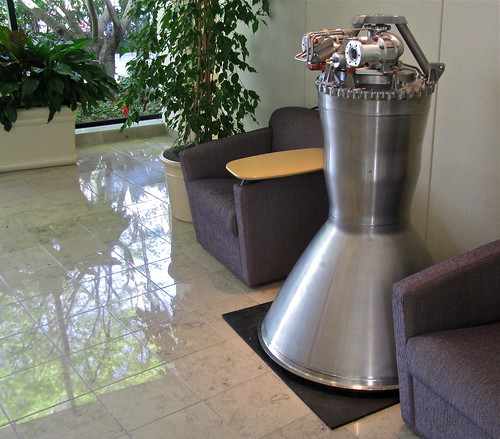
  3. It can’t fit in one photo! The big iron, like the Apollo 14 docking ring and Lunar Module Descent Engine, reside in the DFJ lobby, with explanatory plaques…

     In place IMG_0056

    But I need to take a new photo of that one, as I have a wooden stand now to lift her up and allow for a mirror view up the beautiful ablative skirt.

    I am working on a special display case for the smaller items.

  4. Regarding Etching…only the Rendezvous Windows were (etched)…not the Observation windows (Intentionally left clear to support photography).

    Also the design specification for the CSM did not call out re-usability and it could not be reused for many reasons; the capsule had integrated non-elastic deformable ribs to absorb impact during splashdown, the ablative heatshields were single use, corrosion from salt encroachment (sweat and splashdown) in the astrionics and associated cable plant rendered the vehicle non-flight worthy; corrosive hypergolic propellants did their work, and in general most of the subsystems on the CM had limited design life cycles sufficient to address a single 12 day mission (plus a bit of reserve).

  5. All makes sense to me. I will remove the reuse claim by the NAR inspector from the caption (to minimize misinformation), and insert it here to give your comment context:

    " The Apollo capsules were designed for reuse, up to six flights. Although they passed the inspections, and were deemed flight-worthy, none of the capsules was flown twice."

  6. The Jurvetson Space Museum – I can see it in your future (at the rate you’re going).

  7. Regardless of how you display it, Steve. I am happy it will be seen more than where it was… in a display case at my house. Cheers!

  8. Didn’t realize that they had ever gone as far as to construct rescue command modules. Interesting and educational series again.

  9. Admit it, Steve: You are building your own moon rocket, aren’t you.

  10. There was no specifically constructed CM rescue variant…for Skylab only, an existing Command Module (Spacecraft 119) had its lower stowage lockers removed and replaced with 2 additional crew couches (to accommodate a total of 5 crew members). CM119 was then placed on ready alert atop a Saturn 1B concurrent with Skylab’s three missions.

  11. Yup, and more details if you click on the 5-seat diagram above

  12. The Apollo capsules were designed for reuse, up to six flights.

    Wow! I had no clue this was true. Pretty sad, in a way–given the possibilities.

  13. Ah, that is incorrect, or I misheard… Perhaps he was referring to subassemblies or components, like the windows. The SpaceX Dragon is certainly designed for reuse… =)

  14. Oh don’t buy this space museum charade… these tidbits are all just stored here and there till all the parts are finally procured and suddenly they’ll be gone… re-assembled in a barn somewhere with news to come of a private moon landing effort. Note the detraction for re-use of the lunar module (secret aspect of the project) but the immediate slip that SpaceX IS re-usable… am I the only person seeing the obvious here? 😉

  15. Heh…. true, true… Astronaut Farmer in suburbia….

    I just found the part numbers on the lunar drill core stem:
    PS600100022-005 S/N 052

    which I can cross reference in the NASA/JSC Solar System Exploration Division’s Catalog of Apollo Surface Geological Sampling Tools and Containers, and 052 fits right in there near the bottom of the list with the missing Core Stem serial numbers at the Smithsonian:
    Core Stem NASM Inventory

    Drill, Baby Drill…

    Core Stem Drill baby

    Core Stem Diagram
    ^ note that the blue may be the color marking referenced here.

    Extraction – not so easy
    Core Stem Tendle

  16. AWESOME, did you ever build/put this on display?

Leave a Reply to WF&DT Cancel reply

Your email address will not be published. Required fields are marked *