DSC-RX100M3
ƒ/2.8
24.09 mm
1/50
6400

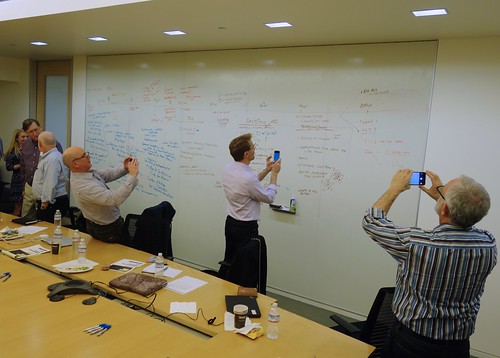
Genevieve (Scout CMO) addressing the room packed with investors and bankers. With Heath Terry of Goldman Sachs on the left and the CEO of Databricks in the center.

Heath: There has been healthy debate around the effect AI may have on the labor market; namely the elimination/creation of job roles. Where do you stand in this debate?

McKinsey concludes that for people earning over $200K, 31% of their time is spent collecting and processing data, and that is ripe for automation.

On one hand, we have seen this story before. 200 years ago, 90% of Americans worked in farming. Today, it is 2% and we feed more than just America. Technology progress created many new jobs that did not exist in 1800 or 1900.

So, we can look at today, and wring our hands that 20% of people today that have a job drive for a living. And we can see the inevitability of that also dropping below 2% with autonomous vehicles. But it’s a question of timing and the pace of change. Change will come much more quickly this time around.

Many of the new jobs of late are at the “edge of automation” (think uber drivers and Amazon warehouse workers). They are jobs that just beg to be replaced by technology, They are surrounded by automation (smart phone apps for Uber, robots for Amazon), and that is their primary interface. If they are replaced with an AI, there is no disruption to the business model – it just runs better.

5 responses to “Wake up People: AI is eating at all of your jobs”

  1. Genevieve, Scout CMO, sharing thoughts on automation & the future of work on the AI Panel, with the CEO’s of Databricks, Clarifai and Cerebras:

  2. in my view, this line of thinking leads inevitably to a guaranteed minium income, perhaps with some gamification to keep life interesting.

  3. Yup, she referenced UBI in the next breath… And as for gamification… SeeThe Edge of Gamification

  4. If this is the end game (pardon the pun) life in these 50 states may not end up being so bad. Unfortunately it is hard to see how the political process can easily accommodate this level of change. Al Alvarez, in one of his writing about poker, said something like "The American Dream is a bluff to distracts them from the harsh realities of their lives." Like the Second Amendment, the American Dream is outliving its usefulness except as an excuse and rationalization not to embrace useful change.

  5. Yes…. earlier here I wrote "in the endgame, global democratization within an information economy will ironically further accelerate the rich-poor gap. Everyone will have access to the American Dream, writ large, but it will feel like the lottery. And, within many countries, like the U.S., the prior winners of the lottery run the lottery. This does not sound like a firm foundation for trust in the system." from a salon on the machine age that we hosted with MITReflections on the new Machine Age — technology, inequality and the economy

Leave a Reply

Your email address will not be published. Required fields are marked *