

On Apollo 9, Lunar Module Pilot Rusty Schweickart performed the first EVA (extravehicular activity) for Apollo, as he opened the hatch to watch the Earth stream by on the first untethered space walk, and went on to fly the lunar module for the first time, a spacecraft that on its own is incapable of returning to Earth.
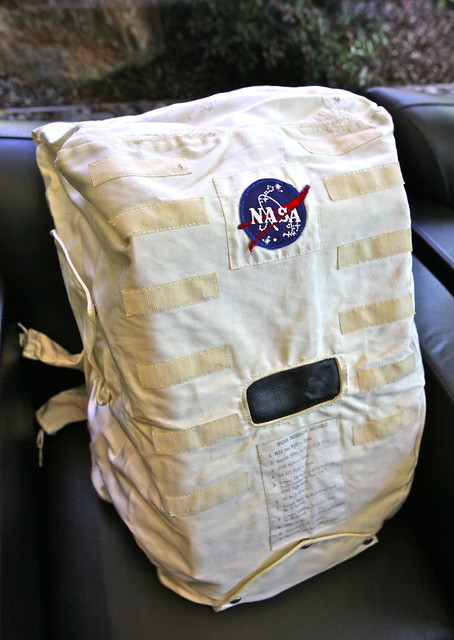
This nameplate was just below the NASA insignia on his Rusty’s PLSS (Personal Life Support System backpack), the first and only PLSS to be space-tested before the lunar landing.
I first met Rusty when he was CEO of Aloha Networks, a DFJ investment in TCP/IP services via satellite. We then reconnected with the B612 Foundation, which Rusty founded to help defend the Earth from asteroids.
Signature on the back: ”Flown on Apollo 9 / Cut from my PLSS / Rusty Schweickart”. The 4.25” x 1” patch is made of Beta cloth, a fabric fireproof up to 650 degrees Celsius used in Apollo spacesuits after the fatal 1967 Apollo 1 fire. The portable life support system (PLSS) is the backpack of the spacesuit, providing essentially the same functions as the spacecraft life support system in a smaller, wearable package. The March 1969 Apollo 9 mission tested several aspects critical to landing on the moon, including the lunar module engines, backpack life support systems, navigation systems and docking maneuvers.



Leave a Reply