

Flown to the moon in 1969, with John Young, Tom Stafford and Gene Cernan, this camera grip comes directly from Lunar Module Pilot Gene Cernan.
Apollo 10 was the dress rehearsal for the Apollo 11 lunar landing, with a detached lunar module dropping tantalizingly close to the lunar surface. Gene Cernan laments: “A lot of people thought about the kind of people we were: ‘Don’t give those guys an opportunity to land, ’cause they might!’ So the ascent module, the part we lifted off the lunar surface with, was short-fueled. The fuel tanks weren’t full. So had we literally tried to land on the Moon, we couldn’t have gotten off.”
Gene Cernan detached this bracket assembly from the Lunar Module “Snoopy”and brought it through the hatch with him as a special souvenir from the mission to the moon, a mission that holds the world’s record for the fastest manned vehicle. Snoopy was left in a heliocentric orbit, the only flown LM ascent stage still intact. He describes this artifact in an accompanying letter:
“On May 21, 1969, while in lunar orbit, Tom Stafford and I entered our lunar module “Snoopy” and undocked from the command module “Charlie Brown” for our descent to the closest approach to the lunar surface at that time, accompanied by this unique Utility Bracket Assembly.
Tom and I used this bracket to clamp mission-critical hardware, such as our 16mm Mauer Digital Acquisition Camera (DAC) and light fixtures, within the interior of our lunar module. The clamp attached to a bar over the LM window.
This particular clamp held the DAC during our LM descent stage separation maneuver which resulted in a momentary gyration due to a faulty switch setting. As such, the DAC recorded the brief rotation of the LM on film for future review by Mission Control.
During the Apollo Program, it was NASA’s policy to allow astronauts to keep disposable items from their mission as personal mementos, and I accordingly chose to include this Utility Bracket Assembly among mine.
This bracket then remained a treasured part of my personal space collection from December, 1972, when it was returned to me by NASA, until December, 2011, when I officially released it from my collection.”
I added some historical details below on the role of those LM gyrations in the most memorable outburst of Apollo 10, and the future adventure of Young and Cernan with the LM clamp on Apollo 17.


![photo[1]](http://farm8.staticflickr.com/7051/6988961845_ed4d4a285c.jpg)


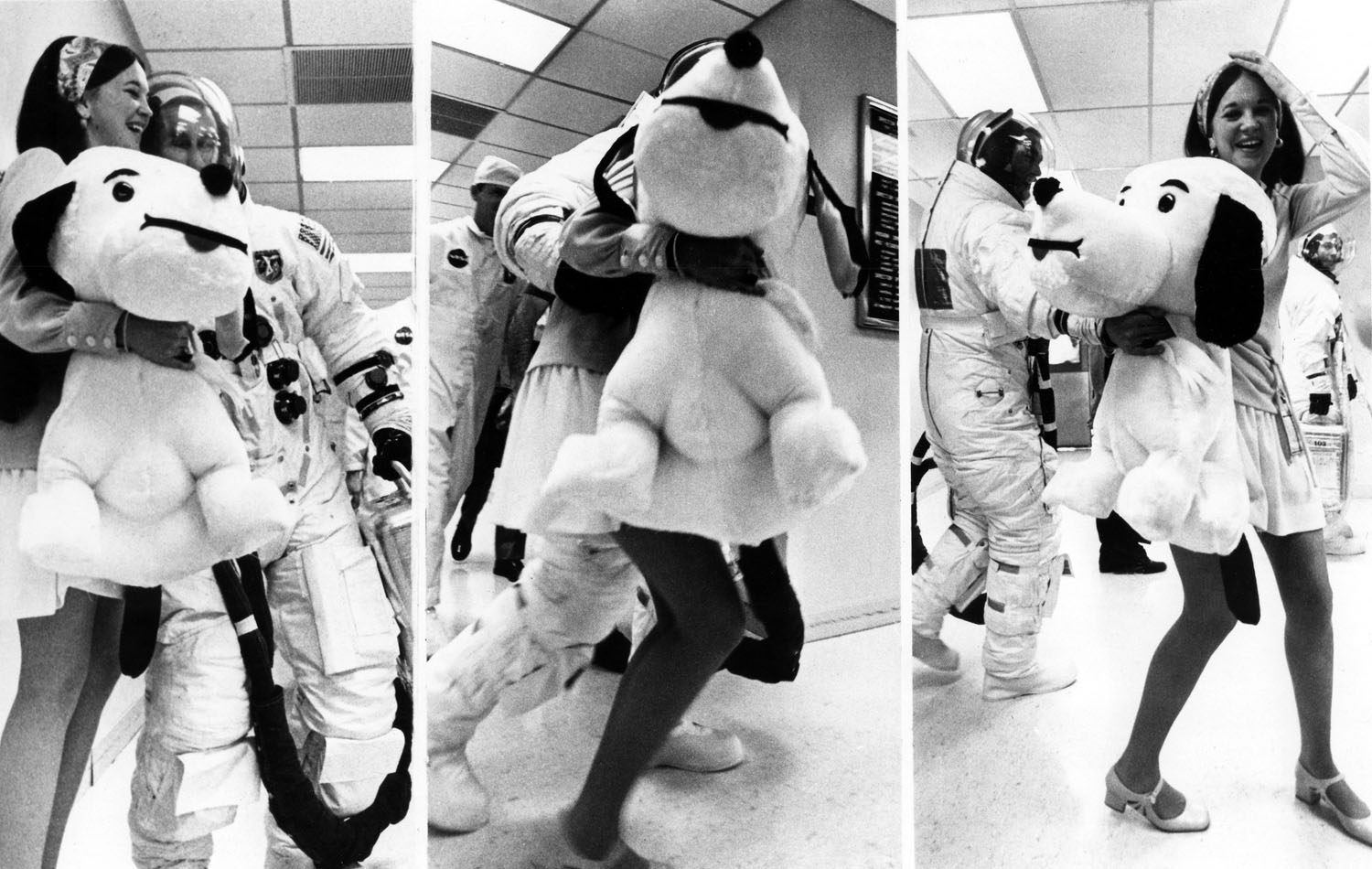
 — Murray & Cox, Apollo, p.331.
 utility lights onto the protective frame of their alignment telescope. At the rover, the clamps held the card onto the existing fender’s support structure to fashion what was a very successful repair."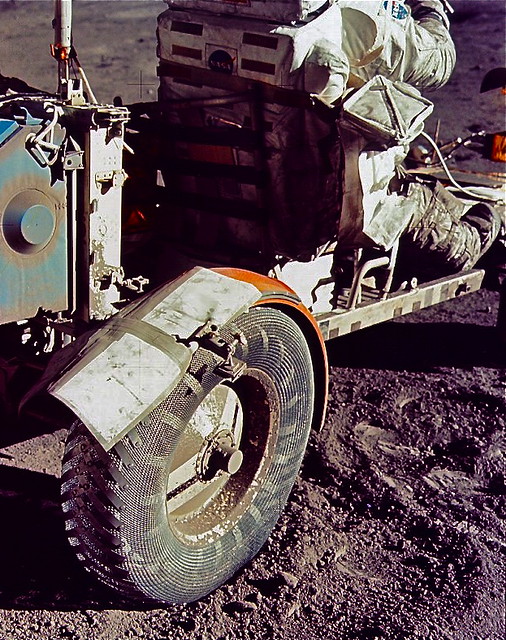


Leave a Reply