Canon PowerShot S90
ƒ/4
6 mm
1/80
80

It finally arrived from the Gomel region of Belarus.

This may be the oldest thing I have held in my hands at 4.2 billion years old.

It is the result of the violent destruction of what would otherwise have been a planet during the formation of our solar system. It comes from the boundary between the silica rich mantle and the iron-nickel core of a now extinct planet, torn away by a catastrophic impact with another planet or asteroid. A mix of solid stone forming olivine crystals (37% by weight) in suspension in liquid metal (iron-nickel) was flung into space to cool over millions of years in a vacuum and zero gravity, forming this beautiful mixture (which could not be created on Earth).

This is a 3 kg end piece (cut and polished) of the Brahin meteorite fall that was first discovered in 1807 by farmers and sent to the local university scientists. During World War II, German soldiers stole samples in Kiev, and others disappeared in Minsk.

The landing site was contaminated in 1986 by the Chernobyl disaster and falls now in the Periodic Control Zone. Coordinates: 52°30’N, 30°20’E

Back to the early days, here is a timeline of billions of years ago (bya):
4.6 bya Birth of our Sun
4.5 bya Planets agglomerate from the gas disk
4.4 bya The first crust forms on a very hot Earth. It probably looked like the ocean crust, and took another billion years to stabilize into continental crust.
4.2 bya Gases from volcanos formed the Earth’s early atmosphere and vapor condensed into oceans.
4.2 bya This proto-planet exploded and soon afterward,
4.1 bya the lunar cataclysm of meteorite bombardment began on the Moon and Earth.

There has been quite a bit of academic analysis of this meterorite:

• Uranium and Plutonium isotope analysis and fission track aging (like carbon dating) establishes the date of its last violent event and expulsion as 4.26 – 4.20 billion years ago: Solar System Research, 2001.

• Transmission Electron Microscopy (which I have some experience with) shows that it cooled very slowly (5 degrees per million years) and the pallasite originated deep from within the source planet: Physics of the Earth and Planetary Interiors, October 1997.

• But a bit of a unique mystery remains here, as it was superheated in two separate events during its formation (using Electron Backscatter Diffraction): American Geophysical Union, December 2009.

• Mantle-core composition (chemical, oxygen isotope and instrumental neutron activation analysis): Lunar and Planetary Science, March 1996.

• Or, from simple visual analysis: “Only 1% of all meteorites are pallasites – the most dazzling of all meteorites.” (I.M. Chait Gallery, 2011)

Perhaps this extinguished planet should be called Alderaan. =)

23 responses to “The rich history of the Brahin Pallasite”

  1. The back side, with gnarly fusion crust from the heat of blasting through the Earth’s atmosphere:
    1673-5

    Polished front surface
    1673-3

    Close-up of a dense area of olivine gems in suspended animation
    1673-11

  2. An amazing object for sure

  3. I wanted to be a geologist when I was a little alienette, and of course I didn’t become one but kept my fascination for the subject… this reminded me of that, like when I fly over a quarry or any open-pit mine, and go crazy to take out the cam and shoot.

    Beautiful the last picture, can you put a link to the large version?

  4. Porphorytic texture from out space. Pretty cool. But what do you mean by it just arrived? Did you buy it?

  5. Would love to see one in real life. Visited Belarus a while ago, did not see any:D Yep, fascinating and mysterious. Wonder what has it seen and being through billions years…wish we could see through its eyes – would it have eyes..would be amazing…gems look like gold. Alderaan?:D maybe it is from a different universe:D

  6. Of all the interesting artifacts and gadgets you’ve posted here this has to be the most fascinating. To hold in your hands something nearly 1/3 the age of the universe is quite extraordinay. The mind boggles at such immense chasms of time…

  7. Fascinating. Could you give a sense of linear scale of this meteorite piece?

  8. Thank you for sharing this amazing piece. It is striking just to consider the physics involved in creating it and getting it here, the random chance of it arriving on Earth, and the timeline on which it exists.

  9. [http://www.flickr.com/photos/tull] – The face is 6.5" x 4.5" and it’s 3.1" deep to the farthest point. It is quite dense, like holding a block of steel.

    pbely – Yes, it is the newest arrival to the space collection at work.

    all – yeah, I am a bit in awes of it too. And happy that so much cosmochemistry has happened with this particular one. Here are the other two that I have, and while less visually striking, they tell an interesting story as well:
    Moon rock from the Apollo 16 site What’s That? (89)
    The first is from the moon; the second was popularized as kryptonite in Superman Returns =)

  10. me want link! link! link! link!

    (-"Beautiful the last picture, can you put a link to the large version?")

  11. [http://www.flickr.com/photos/24270806@N06] ABSOLUTELY!!! Exactly that’s the reason why I *need* to see that picture!!! 😀

    -you know me well!!

    Btw, isn’t a pallasite a japanese parasite?

  12. -Actually, parasite is a Japanese pallasite.
  13. I’ve been looking at these too…An amazing sample! Simply massive and beautiful.

  14. [http://www.flickr.com/photos/wfdt] Thanks for the correction! I then had it upside down! 😉

    [http://www.flickr.com/photos/24270806@N06] There, WF&DT brought the answer.

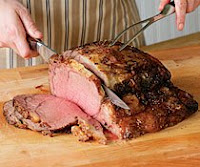
  15. You could slice it up like an end cut of prime rib ….

  16. [http://www.flickr.com/photos/jgury] Marvelous idea!! the only problem I see is that if he does that, we all here in this thread must receive a slice… it’s in the contract. Small font.

  17. If SJ does a mainstream science show with all this stuff he has the advantage of already having catchy theme music that even rhymes with his name. Luckily his first name is easy and not some foreign name like Pierre or Vladimir. I’m sure this comes up often but the lyrics are still interesting in context. One of the more simple catchy space cartoon themes of all time, you know it, you love it, the Jetsons:
    Meet Steve Jurvetson / He’s from Stanford / Daughter Judy / Robot Elroy…..
    Whatever. You won’t forget how to pronounce the name.
    http://www.youtube.com/watch?v=eSptqzfTSSE

  18. You should buy one of those Rolex watches where the face is a polished meterorite – yeah that’s the ticket!

  19. Eventually DFJ will have to become a proper museum as you will have filled the place with interesting artifacts and run out of room to do VC work!

  20. Prettiest pallasite I’ve ever seen (both sides)…

  21. My image search algos still have it confused with a prime rib of beef.

Leave a Reply to angry shock Cancel reply

Your email address will not be published. Required fields are marked *