Canon EOS 5D Mark II
ƒ/5.6
16 mm
1/125
5000

The experimental end of the world’s brightest x-ray laser, generated by the linear accelerator at SLAC.

SXR will probe ultrafast chemistry with flash imaging of a quadrillionth of a second.

Inside this focusing optics chamber, two elliptically bent mirrors direct the FEL (free-electron laser) beam into the experimental chamber. Dynamically bent mirrors (silicon mirror bent with actuators) can be adjusted to focus the beam into an arbitrary position in the endstation to change the focal spot on the sample, depending upon the experimental requirements.

Mirrors with glancing angles are generally used for x-rays instead of lenses (although they are now starting to use beryllium concave lens arrays for the hard x-rays in the hutch next door).

The planar-elliptically bent mirrors are called Kirkpatrick Baez mirrors, named after the inventor – Joan Baez’s dad.

It’s all Diamonds & Rust.

28 responses to “Never seen a SXR beamline”

  1. The focusing chamber diagram looks suspiciously like the sheep drawing of Le Petit Prince

    amo_focusingoptics AT29185_1

    Meanwhile, the underground physicists are getting a lot of screen time
    IMG_8150

    across the hall from Hutch Two
    IMG_8147

    the end of the line
    IMG_8142
    The little yellow box on the left is labeled "Beam Emergency Shut Off"

  2. "a quadrillionth of a second", 10^-15 seconds, implies that x-ray pulse, traveling at the speed of light, is less than a third of a micron long — less than a wavelength of visible light.

    This feat alone is astonishing. It implies the x-ray optics is at least as good as our finest optical telescopes, but in a 2-mile-long structure.

    For comparison, the most intense laser on the planet, the HERCULES at the University of Michigan in Ann Arbor, only produces a(n optical) pulse more than 10 times longer (which can also be used to make X rays).

    Do they allow mere mortals to see the place? I’m going to be just down the street from there in a couple of weeks…

  3. They were working on going below 10 fs pulses 1.5 years ago, as you can read here, and perhaps they were pre-announcing or just anticipating the 1 fs equivalent, but they did mention something about imaging the electrons of ethane if that’s a clue.

  4. The x-rays are produced when a stream of electrons passes over an array of magnets with alternating poles which causes the electrons to wiggle back and forth and radiate at a frequency dictated by the spacing of the magnets and the speed of the electrons incidentally this also cause the electrons to bunch up like molecules in a pressure wave which means the radiation is also somewhat coherent.

    @imager or a wave train of 30-3000 x-rays depending on the energy. I also heard in addition to high temporal resolution you also get get good spatial resolution since the x-ray pulse usually vaporizes the target so you want to get a snapshot of the molecule before inertia catches up and your imaging an explosion instead of the original molecule…. or something like that… went to a talk a while back by Roger Falcone.

  5. Hehe… Totally different scale from my lame attempts:
    Mystery organic thing 4 (by request)
    [That’s a 3D x-ray image of a pecan, but it took 18 orders of magnitude longer time than the 1 fs imaging mentioned here :-). No explosions though: The pecan received a human-lethal dose of radiation but was left intact (until I ate it) ]


  6. The idea here per SJ’s whimsical observation is some bling to go along with the science project. I’m not sure about a medallion. I think it would be better as a coin, like you do with challenge coins in the military. In this case you would do some clever French engraving or inlay like "Si quelqu’un veut un mouton, c’est la preuve qu’il en existe un." then put an x-rayed sheep on the other side of the coin.Of course, nobody except insiders would have a clue about WTF it is. This stuff is not that expensive to do and beats the hell out of some tired tombstones like you do for finance projects and issues. Yawn.
    My quantum mechanics is a bit rusty but I would suspect as you keep pushing the time resolution down to these ultra small intervals you would start to see quantum pattern/motion effects, no?

  7. I wish we’d had digital cameras and Flickr back when I was at CERN …

  8. So…as my source for science info…
    What is this ultra fast imaging going to show…?
    A chemical reaction…somehow ?


  9. This Femtochemistry is so CalTech, but now we see SLAC in on the fun.

    http://www.ust.caltech.edu/press/uem1.html

  10. My poor memory recalls that the structure of DNA was sorted out years ago by a low tech version of something like this…maybe 3D ?
    Its all Greek to me,sadly.

  11. Basic X ray crystallography is what I think led to getting the double helical structure of the DNA molecule if I recall the Watson book that was required reading in the 70s. That has to be one of the more overrated discoveries there is. As if getting something inevitable figured out a couple months ahead of some other group makes a big difference. Not exactly at the same level as coming up with the theory of evolution, the conception of the periodic table or even the Heimlich maneuver. Regardless, this Femto scale interval imaging either by electrons beams or Xrays is pretty nifty stuff. Fair to say Prof. Ahmed Zewail did not get the Linus Pauling chair at CalTech for nothing and you would not get him confused with Al Gore at the Nobel prize science awards ceremony. Just look at all the incredible images and vids at this site: http://www.ust.caltech.edu/press/uem2.html Here is a statement that is really intersting… "The uncertainty paradox: The fog that was not
    Fs resolution is essential for observing atomic-scale dynamics in chemistry and biology. But quantum uncertainty was thought to be an obstacle – why wasn’t it?" I had thought that some of this stuff should not be observable too. What gives?

  12. Regarding the uncertainty aspect;
    en.wikipedia.org/wiki/Heisenberg%27s_microscope

    I think we can image atoms…and they do not fly around as much as electrons, etc.
    Plus maybe when you physically cool stuff it flies around less…
    And when its tightly bonded….lattices,metals and such…its less wiggly.

    As to the comment about being several months ahead of someone else…
    I think you are wrong there…
    Most "discovery" is a process over time…a step wise approximation.
    Most of us,including myself just read about the headlines…
    and often thanks to SJ…(!)

  13. I’m not so sure about atoms being easier grasp as an image or in any other way vis-a-vis electrons. The way electrons move around so much makes them easier to grasp in all kinds of ways from the macro visual of lightning, to very tactile sensations, and then down to objects like orbital cloud patterns. What can you associate with atomic level other than a dark powerful point? Atomic scale and density is much different than what is going on with electrons, That is the big deal about the Rutherford experiment if my off the top memory is accurate. The vast part of ,matter is empty space except for tiny dark points that have powerful forces and bizarro particles. The famous Rutherford quote was that he felt it was like shooting a canon ball at tissue paper and then having it bounce back at you, Something like that. Atoms just are not as familiar in any kind of imagination or sensation and its almost all negative-mushroom clouds, nuclear Armageddon, Chernobyl.
    With the structure of DNA what I mean is that this was something that was going to get figured out sooner rather than later and any number of groups or individuals were very close to getting it right. Getting it right is important but that is like saying how great the discovery of North America was. Not really. Coming up with a huge work like Origin of Species, now that is a big big deal. You might think it is off the wall but think about something like how much smarts are behind coming up with the Heimlich maneuver. How long had people been watching each other choke to death on food and never come up with this? No special tools or med tech required either. How come Hippocrates, Paracelsus, Drs Faust,, Wo Fat or anybody else in history never came up with this? To me that is a big deal. DNA? Nah. They also seem to have had a few ethical lapses too in this science as competition/.race.

  14. cool discussion here, yep thanks to SJ – we can be exposed to all this – at least online!!!

  15. They (whoever generic "they" is) should give SJ his own science show. He could be like the Dirty Jobs guy only more high tech. Jeeez, these labs are so big scale now they could just as well send the Dirty Jobs guy in as a janitor and see how he figures out where to go:
    slacportal.slac.stanford.edu/sites/lcls_public/instrument…
    Cool animation on this page:
    slacportal.slac.stanford.edu/sites/lcls_public/instrument…

  16. Yep, on this scale I feel I am less than one ant:) janitor? Funny… there was a song….janitor’s boy:D

  17. Yes, at 2:20 here: http://www.youtube.com/watch?v=8BUF10MBcsQ but she does not mention anything about him working underground at the Stanford Linear Accelerator lab complex. Maybe he was hiding at Fermilab or stuck doing gritty EPA work at Argonne and she did not want to mention it.

  18. Thanks:D yep, you are right as usual, she did not mention it:D

  19. Hey, if SJ does not want to do a science show then maybe he can enter politics. I mean, you got the first mainstream Estonian venture capitalist who is articulate and bright and clean and a nice-looking guy. I mean, that’s a storybook, man

  20. @jgury politics is a dirty word:D it is better to be a janitor’s boy in a clean room:D

  21. NERD alert;
    SLAC is a joint contributor to an online journal.
    http://www.symmetrymagazine.org/cms/

  22. The SJ science show could even be competitive with Dancing With the Stars if that is what it takes…..
    http://www.symmetrymagazine.org/cms/?pid=1000737

    I would go all the way and settle for nothing less then the big OWN with material like this.

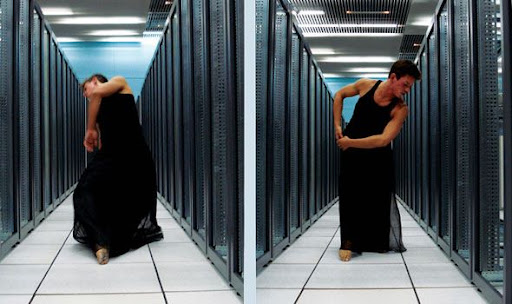
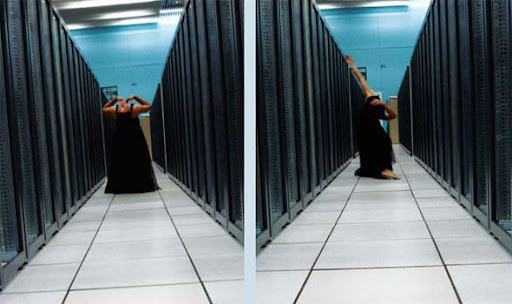
  23. Actually, this is great! Love the idea of evolving art forms right at the place where the new technological pulse starts:) wonderful links…dancing part is cool…my job requires sitting at the computer for hours, I have to balance it with some sort of dancing. Otherwise, I am in pain.

  24. Yes. Interpretive dance in math and physics had its origins in the basement of Eckhart hall at the University of Chicago during the Manhattan project where it is still regularly performed, mostly by undergrads, to this day. Stanford and the east coast clearly need to catch up

  25. "Dancing with the Boson’s"….??

  26. Celebrity judges of course don’t have to know anything about scientific topics-
    Bosons, Bustiers, who cares. As long as they can get along with Steven Hawking or J Craig Vetter, no problem, SJ can handle it.
    @41197102@N04

  27. I do not like American idol… have never watched it:(
    do not really understand your humor again if it is in fact humor:(

  28. I’ll be the first to admit there is nothing funny about the prospect of facing the judgement of both Anna Wintour and André Leon Talley- especially when they are wearing those evil space alien Xray spec sunglasses. That is where SJ comes in to be the nice guy who can explain everything to them and plead for mercy while they do makeovers on nerd scientists getting them ready for big TED productions.

Leave a Reply

Your email address will not be published. Required fields are marked *