Canon EOS 5D Mark II
ƒ/2
100 mm
1/640
2500

Sam Harris posits that we can have experts in morality.

“How have we convinced ourselves that in the moral sphere, there is no such thing as moral expertise, or moral talent or moral genius even? How have we convinced ourselves that every opinion counts? How is it that we have convinced ourselves that every culture has a point of view on these subjects worth considering?”

The TED Video went up today.

“There are right and wrong answers about morality.”

“Defining morality in terms of human and animal well-being, science can do more than tell how we are; it can tell us how we ought to be. Moral relativism is simply false—and comes at an increasing cost to humanity. And the intrusions of religion into the sphere of human values can be finally repelled: for just as there is no such thing as Christian physics or Muslim algebra, there can be no Christian or Muslim morality.” (from book)

“There may be many peaks on the moral landscape. There may be many right answers. But this does not mean that there are no truths to be known.”

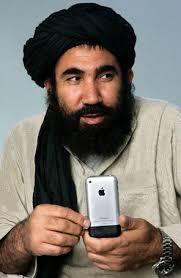
Minute 10 (and the photo here): “Consider the great problem of women’s bodies. What to do about them? Well this is one thing you can do about them. You can cover them up.”

“Who are we to pretend that we know so little about human well-being that we have to be non-judgmental about a practice like this.”

This leads him to some pretty emotional conclusions…

48 responses to “Moral Enlightenment”

  1. I’m thrilled to see the dogma of subjective or command based morality challenged. A rare event indeed.

    Morality should be properly, rationally, based around the object it’s associated with: humanity. It is after all a human sphere, for this earth and this life. By understanding the simple question: what are the requirements for humans to thrive both as individuals and as a whole, we can derive a healthy, objective morality. Not about personal choices such as sexuality or diet, but a morality that is about the realm of human relationships toward each other, specifically governing freedom and liberty (the freedom to not have others impose their will upon you by force). Not a morality for getting to an unknown next world, but for prospering on this world.

    The millennia long partial hijacking of morality broke it into two popular systems: religious morality (see: dark ages, Sharia Law), and subjective morality (see: USSR, Nazis, Mao, gulags, holocaust). Mostly morality has been abandoned to social collectivism and to religious repression: which has manifested itself in the form of communism / statism / fascism / mob rule politically (the good of the whole used as an excuse to murder the individual); or the mystics of power in the religious realm (see: Iranian clerics), using religion to enslave people. One group says morality is a dictate handed down by an unknowable god, the other says it’s determined arbitrarily by the whims of the collective (subjective morality, in which case 51% rules the day or whomever can seize power does such as the communist party etc).

    Aristotle, Ibn Sina, Thomas Aquinas, John Locke, Francis Bacon, Thomas Jefferson (& co), Ayn Rand, all understood on one level or another that there can be an objective moral code (leading to effectively experts on morality), and that objective morality must be based around a code of respect for individual rights and non initiation of force.

    The modern world desperately needs a renaissance in this field. The extremism of religion around the world, and various other ideologies, can only be tamed through a rational revolution in how morality is viewed. Just as it was once before, which led to the enlightenment.

  2. Why is Sam so quick/eager to take the side of the veiled woman from afar, of whose society and history he only seems to know and care about their males’ blowing themselves up, and not pay attention to things closer to home?

    Perhaps because there are too many peaks and valleys and his standing is not as tall as grand.

    To step aside from Harris, I’m amazed at how this whole brain-scanning business goes on unquestioned and scientists latch onto it as the ultimate proof…

    And, to bring it back, Sam wouldn’t trust the veiled woman to tell him the truth unless he looked at her brain-scan. Yet another attempt at objective science, soon we’ll start counting the victims.

  3. I don’t think he would say it’s so easy, or that you have to be purely reductionist to study a higher level abstraction.

    Jonathan’s summary is a good place to start.

  4. Morality is structure and structure comes through institutions. Modern society has shifted institutions. It is a process, of many trade-offs. Indeed, some are complaining about lost moral elements, others claim we are too tied to moral.

    Statements such as Jonathan’s, "Morality should be properly, rationally," hold within their frame of reference. All I was suggesting were a couple of points: 1) Talk about moral aspects close to home unless you know very well the frame of reference of the other; and 2) Brain scans are just what their name suggests, surface manifestations.

    Let me bring my points home: I find it difficult to look in the eyes of any Muslim patriarch and talk about morality of veiling women, especially when/if I’ve said nothing about the despicable fact of driving millions into war with all the ensuing human loss, misery and all that.

  5. That simply begs the old adage: two wrongs don’t make a right. Or put another way: just because America’s moral fiber has perhaps been crumbling for decades (whether it’s Vietnam or our mess in Iraq), that doesn’t mean veiling women with the backing of the threat of force is not wrong. To speak out against one injustice does not require that you devote every waking second speaking out against all 25,028,275 injustices occurring every single day across the planet. Extrapolate that requirement and what it would mean if actually implemented.

    If we neutralized all judgment on morality on the basis that we’ve all done something wrong at some point in our lives, then every person would be frozen from ever doing anything about any atrocity for the rest of time. Evil wins when good people do nothing; those good people usually having had their moral compass frozen by wet noodle arguments starting from the premise of ‘well who am I to do or say x y or z… since I’m not perfect myself.’ It’s the equivalent of the saying about casting the first stone; if everyone throughout history had lived by that concept, the revolutionary war could not have been fought because the founders were slave owners; the Nazis could have not have been defeated because American GI’s killed innocent people during WW1; and Muslims would still be getting slaughtered in Serbia/Kosovo because the US killed innocent civilians in Vietnam (so what business would we have intervening given the mistakes our nation had made previously). Or get even more ridiculous: who is Bill Gates to go around bringing health to millions of impoverished children, when he may have done some immoral things in business (it’s the same premise just spun from the opposite pole); who is he to make a moral judgment about their needs versus the needs of other people anywhere on the planet. And so on and so forth.

    The moral intimidation tactic about casting the first stone is an old religious concept meant to suspend judgment (decision making). Religion wanted the brain neutralized, and those sorts of arguments have always been made to that end. That however obviously does not, on the flip side, imply that one should go around being a raging hypocrite in their behavior (eg condemning only Muslim evils, while ignoring all the aggression spilling out of America with its 180 military bases and endless wars, or brutality in the ‘war on drugs’ and so on). It’s possible to be consistent in condemning acts of evil, even if you can’t always literally save the whole world; or put better, it’s possible to always strive to be consistent.

  6. Jonathan, you write about "moral intimidation tactic," and I have no idea how that applies to what I wrote.

    You seem to be aware of several of the angles Harris misses; moreover, in the last sentence of the last paragraph you embrace what you preach about not being hypocritical, yet where does that leave Sam Harris?

    Otherwise, do you want to turn it into an argument between the two of us? There’s not much to argue, for we seem to show consistency in our respective evaluations of what’s wrong. My point is that we, or at least the morally sensitive lot, should clean our own glass house before casting stones. Otherwise, we’ll turn into a neocons-choir, that is, we turn from amoral into immoral…

    ————-
    P.S. "To speak out against one injustice does not require that you devote every waking second speaking out against all 25,028,275 injustices occurring every single day across the planet." I’m not speaking about 25,028,274 daily occurrences of injustice, but about the one single injustice we’ve kept at since 2003. This is our generation’s Viet Nam, and its legacy will saddle us for more/longer.

    —————-
    Here’s a comment from the original TED talk, illustrating another view:

    Hussain Al-Moosawi (+3)

    "Think about this, punishment, for BEING raped. This is by far the single most heinous example of religious amorality I have heard of in the modern world, short of using religion to justify murder, which is closely tied to this."

    FYI: Punishing for being raped is a "tribal act", it is not based on the religious teachings, which in many cases conflict with the rules of the tribe or society.

    Wearing the burqa is not an obligation, yet it became a norm in many conservative societies. Taking it off, along with uncovering the head does not adhere to the islamic teachings, but there is no punishment to it. Yes, the society does apply its own way of punishment.

    There is no problem with questioning religious taboos. Yet, would be good to be accurate and differentiate then separately critisise religious teachings and traditional values, which again, can be totally opposite. You can easily insult people by attributing non-facts to their belief.

    If you’re sure about the fact, then go ahead.

  7. Watched this video the other day. Sam is great.

  8. what [http://www.flickr.com/photos/brentdanley/] said.

  9. Sheer crap that– ‘morality derives from structure.’ Rules derive from structure, but every human has a moral sense, always. Rules of right and wrong are evident in very young children. As soon as they can make one or more of their decisions stick, an observer can discern a simple, egoist moral system.

    What’s good for Me is good, bad for Me, bad. We all start off that way, and develop, if at all, as we go. No one needs to wait for some structure.

  10. Look here. The moral sense, like intuition, imagination, memory, reason– always present, always available, part of the basic equipment for decision making. And decision making is what it’s for, after all. Ethics isn’t something formal, something you bring out and dust off for special occasions, but can take part in any decision. We make hundreds of decisions a day.

  11. One’s reason, one’s memory, and one’s moral sense, too– all of them develop and are honed through use. Imagination and intuition the same.

    Consider what happens when someone adopts a group into the charmed circle that once held just Me. Say, a patriot, or a religionist, a nationalist, any group will do– gang, tribe, anything. At that time one shifts to a group-centered moral structure– what’s good for Us is good– and one is capable of a new realm of moral decision. Self sacrifice for the greater good, is what I refer to. That sort of thing, falling on a grenade to save one’s squad-mates, baffles the simple egoist, who is still incapable of it.

    One feels it as a higher calling, one sees the old egoist morality as puerile and wrong-headed. That’s an example of a development in one’s moral structure. It derives from no such thing as structure.

  12. Rules, laws, customs and the dicta of power structures intend to influence decision making, but each person carries her own morality with her, as intimately as her memory.

  13. Formal systems of ethics, derived by philosophers from principles, fail to describe what goes on in the mind during decision making. Humans evolved, they were not derived from first principles in some logical way. That’s why logic-based systems fall apart when they attempt to describe and predict human decisions.

  14. Reason is only one tool in the kit. Some decisions, and you can check this by reflection upon your own decisions, are mostly moral ones, aided by memory; others seem to have been mostly intuitive or imaginative. Once in a while one even makes a decision based largely on reason! But all the elements are there, and any combination of them could be used in the next decision.

    Wisdom consists in the equilibrium, the balance of these elements, which dominates and to what extent.

  15. This just came out on EDGE: A statement of consensus reached among participants at The New Science of Morality Conference:

    1) Morality is a natural phenomenon and a cultural phenomenon
    Like language, sexuality, or music, morality emerges from the interaction of multiple psychological building blocks within each person, and from the interactions of many people within a society. These building blocks are the products of evolution, with natural selection playing a critical role. They are assembled into coherent moralities as individuals mature within a cultural context. The scientific study of morality therefore requires the combined efforts of the natural sciences, the social sciences, and the humanities.

    2) Many of the psychological building blocks of morality are innate
    The word "innate," as we use it in the context of moral cognition, does not mean immutable, operational at birth, or visible in every known culture. It means "organized in advance of experience," although experience can revise that organization to produce variation within and across cultures.

    Many of the building blocks of morality can be found, in some form, in other primates, including sympathy, friendship, hierarchical relationships, and coalition-building. Many of the building blocks of morality are visible in all human culture, including sympathy, friendship, reciprocity, and the ability to represent others’ beliefs and intentions.

    Some of the building blocks of morality become operational quite early in childhood, such as the capacity to respond with empathy to human suffering, to act altruistically, and to punish those who harm others.

    3) Moral judgments are often made intuitively, with little deliberation or conscious weighing of evidence and alternatives
    Like judgments about the grammaticality of sentences, moral judgments are often experienced as occurring rapidly, effortlessly, and automatically. They occur even when a person cannot articulate reasons for them.

    4) Conscious moral reasoning plays multiple roles in our moral lives
    People often apply moral principles and engage in moral reasoning. For example, people use reasoning to detect moral inconsistencies in others and in themselves, or when moral intuitions conflict, or are absent. Moral reasoning often serves an argumentative function; it is often a preparation for social interaction and persuasion, rather than an open-minded search for the truth. In line with its persuasive function, moral reasoning can have important causal effects interpersonally. Reasons and arguments can establish new principles (e.g., racial equality, animal rights) and produce moral change in a society.

    5) Moral judgments and values are often at odds with actual behavior
    People often fail to live up to their consciously-endorsed values. One of the many reasons for the disconnect is that moral action often depends on self-control, which is a fluctuating and limited resource. Doing what is morally right, especially when contrary to selfish desires, often depends on an effortful inner struggle with an uncertain outcome.

    6) Many areas of the brain are recruited for moral cognition, yet there is no "moral center" in the brain
    Moral judgments depend on the operation of multiple neural systems that are distinct but that interact with one another, sometimes in a competitive fashion. Many of these systems play comparable roles in non-moral contexts. For example, there are systems that support the implementation of cognitive control, the representation of mental states, and the affective representation of value in both moral and non-moral contexts.

    7) Morality varies across individuals and cultures
    People within each culture vary in their moral judgments and behaviors. Some of this variation is due to heritable differences in temperament (for example, agreeableness or conscientiousness) or in morally-relevant capacities (such as one’s ability to take the perspective of others). Some of this difference is due to variations in childhood experiences; some is due to the roles and contexts influencing a person at the moment of judgment or action.

    Morality varies across cultures in many ways, including the overall moral domain (what kinds of things get regulated), as well as specific moral norms, practices, values, and institutions. Moral virtues and values are strongly influenced by local and historical circumstances, such as the nature of economic activity, form of government, frequency of warfare, and strength of institutions for dispute resolution.

    8) Moral systems support human flourishing, to varying degrees
    The emergence of morality allowed much larger groups of people to live together and reap the benefits of trust, trade, shared security, long term planning, and a variety of other non-zero-sum interactions. Some moral systems do this better than others, and therefore it is possible to make some comparative judgments.

    The existence of moral diversity as an empirical fact does not support an "anything-goes" version of moral relativism in which all moral systems must be judged to be equally good. We note, however, that moral evaluations across cultures must be made cautiously because there are multiple justifiable visions of flourishing and wellbeing, even within Western societies. Furthermore, because of the power of moral intuitions to influence reasoning, social scientists studying morality are at risk of being biased by their own culturally shaped values and desires.

  16. [http://www.flickr.com/photos/cantdog] some people couldn’t tell structure if it hit them. Coherence is not your strong point either.

  17. [http://www.flickr.com/photos/jurvetson] excellent brief of the state of the art in moral thinking.

    #3: common sense morality has its limitations; absent a shared system of (moral) values, expect some differences, mostly inconsequential for mundane matters.
    #7: that’s what I was arguing for/about. The challenge here is how far into moral relativism one goes.
    #8: in the western (moral) thought this goes at least as far back as Aristotle

    The closing paragraph shows how we in the west want to have the atheist moral cake and eat it too. Quite an impossibility for we traded God/metaphysics off for moral shifting sands.

    Notably missing is moral utilitarianism. Notably present is morality as a natural phenomenon (#1). Most notably missing are moral values/criteria to define good and wrong.

  18. Defining the good is excellent for someone engaging in reasoning about it, but morality doesn’t proceed by reasoning about the good. Definition is necessary to reason, but not to morality. Philosophical systems couched in rational statement inhabit a different place.

    You aren’t going to achieve universality in the way people see what’s right and what’s not, and there’s no good reason to wish for it. It’s a good thing. Morally, spiritually, I have come a long way from the egoism I had as a toddler and an infant. I am glad of that difference; it reflects growth, maturity. Different people are on different developmental rungs, and new people being born all the time– there can’t be universality.

    It’s a good tool to use, growing. Can’t progress much if you never consider what the next step is. All the same, you don’t get to just put reason to work on it and then apply the result like a morality transplant.

  19. "You aren’t going to achieve universality in the way people see what’s right and what’s not," hence moral relativism; "and there’s no good reason to wish for it. It’s a good thing," somebody should have told/reminded us of this before going into Iraq…

    Try to understand this thread in its entirety/structure, for we might not be that different at personal levels, morally, that is.

  20. Couple updates. This photo is now used on Wikipedia and Sam gave an interview on his new book, The Moral Landscape, in New Scientist:

    "the most common defence one hears for religious faith is not that there’s so much evidence that God exists, but that religion offers the only basis for a universal morality. Moderates and fundamentalists seem to agree on this point. Of course, it makes no sense as a defence of faith because even if it were true, it wouldn’t suggest that God exists. But there is the additional problem that religion is a terrible source of moral guidance in the 21st century.

    I happen to think that the scientific study of morality is the lever that, if pulled hard enough, will completely dislodge religion from the firmament of our concerns. The world religions will land somewhere near astrology, witchcraft and Greek mythology on the scrapheap. In their place we will have a thoroughgoing understanding of human flourishing, which will include even the most rarified and traditionally "spiritual" states of human consciousness.

    How can we move on from religious notions of morality?

    Once we accept the idea that right and wrong relate to questions of well-being, and that such questions have answers that will be best illuminated by honest observation and careful reasoning, then we can decide, once and for all, that certain people are not worth listening to on the subject of morality.

    Consider the Catholic church. This is an institution that excommunicates women who attempt to become priests, but does not excommunicate priests who rape children. This church is more concerned about stopping contraception than stopping genocide. It is more worried about gay marriage than about nuclear proliferation. When we realise that morality relates to questions of human and animal well-being, we can see that the Catholic church is as confused about morality as it is about cosmology. It is not offering an alternative moral framework; it is offering a false one."

  21. There is indeed at line of moral reasoning that is anchored neither in religion, nor metaphysics, but in socio-psychology and evolution. The process is thoroughgoing.

    I’m not sure what Sam makes reference to in all the above, other than the indirect one to virtue ethics. As well, I cannot figure out whether or not he supports moral relativism; I suspect not, otherwise the whole argument becomes simpler.

  22. I do not argue for moral relativism; rather, I note an observed fact, to wit, that everyone’s morality is uniquely their own. Further, that each person’s moral sense changes through time. I don’t see how anyone can doubt this who works with children and associates with philanthropists. Plainly, our moral sense is capable of evolving–Ray Charles could see that– and not everyone bothers to evolve. Faced with this, it’s sheerest flummery, or else self-delusion, to talk as though there could be such a thing, descriptively, as a universal morality.

  23. Philosophical systems, whether they go back to Aristotle or not, are prescriptive, not descriptive. Such entities are rational, not moral.

  24. I just finished his book, and he references this TED talk in the footnotes, saying the online posting "produced a blizzard of useful commentary." (p.197)

  25. The lack of historical and basic philosophical knowledge at these events is breathtaking. Did professor Sam or anyone else there ever hear of Confucius? Likewise to say that the prof. Sam concepts of Buddhist ethics and morality are at the level of the sophomoric is a compliment. His understanding of western thought from End of Faith is similar: "Thousands of years have passed since any Western philosopher imagined that a person should be made happy, peaceful or wise, in the ordinary sense by his search for truth."

  26. Well, Sam may have a point. Over the centuries, many of the basic sort of concepts philososophers once speculated over have been investigated and become known. We know how babies form, what a rainbow is, the extent of the seas, the classes of life forms, the nature of the sun, the periodic table and the fine grained structures in chemistry– the field open to philosophic discussion narrows through time. Meanwhile, philosophers themselves study logic.

    Since the eighteenth century, Western philosophers’ ideas about ethics are couched in dry logical sequences. At least it’s a step above religious ideas about ethics, where logic barely gets a nod, but people still will all grow up making thousands of decisions using their own inner moral sense before they read their philosophers or study their holy books. Life and decision-making are not held in abeyance until one decides between Bentham or Rand, Confucius or Lao Tzu. Moral decisions proceed without the various systems and systematizers, because moral decisions precede them.

  27. Therefore, Sam Harris’s hope for a further Enlightenment, elevating Reason above all else, would actually be irrelevant to the processes by which moral decisions are made. The dar al’Islam needs an Enlightenment, since they are in a Dark Age, one which bids fair to last every bit as long as the earlier Christian one. But Reason’s ascendancy has done morality small service. Humans use reason, but it is far from representing all we need, far less all we use to make decisions.

  28. http://www.virtuelles-kupferstichkabinett.de/zoomed.php?signatur...
    Zoom in on the pulpit and the guy has a striking resemblance to Sam Harris
    ‎"Ten years have passed since a group of mostly educated and middle-class men decided to obliterate themselves, along with three thousand innocents, to gain entrance to an imaginary Paradise." Yes, very simple motivation really ,when you understand it in Sam Harris terms. Are you taking notes? bit.ly/nZemTr

  29. wow… just one generation ago, a record store in Kabul…
    Kabul befoere Taliban
    I wonder if they know what is about to come… and that some of them would end up saying that they want the new strictures… Compared to the "modern" photo from Sam Harris above, it’s a visual portrayal of one of the most virulent infections in modern evolution.

  30. This of course is yet another obvious case of how religion and the inseparable fanaticism poisons everything. Indeed, the geopolitical impact of events like the soviet invasion pale by comparison to the virulent medieval atavism that fully empowers radical Islam.
    http://www.foreignpolicy.com/articles/2010/05/27/once_upon_a_tim...

  31. I know you said this in jest, but right you are. Plain old brutalism has lasting economic and sociological repercussions, but they did not effectively infect the mind with a propagating virus, right? Do you think Soviet political theory will be inculcated to children born today in Afghanistan, and their grandchildren, and so on…?

  32. For some reason I doubt that Afghanistan was on track to become a secular Islamic model society before the Soviet invasion, or that they were going to be inoculated from a viral culture of warfare that goes back to the days of ancient Greece. The fact that Islam became the most successful culture to control the region should tell you something. The more successful groups like the Mughals were not some simplistic version of fundamentalist fanatics either, but a more enlightened culture. Much more savvy in getting things to work than the British, Russians or Americans that is for sure and who were all in fact stupid to get stuck there thinking they could succeed.
    Recall that US foreign policy started in the Carter administration encouraged Islamic fundamentalism then expanded under Reagan (who can forget the famous photo of RR meeting with the Mujahideen, in the White House) as the "Green Crecent" strategy of fighting Soviet expansion.

    Now happy Taliban campers, looking forward to the bright world of modern Islamic consumer culture thanks to Apple:

    So a happy ending! Apple succeeds where empires have failed.

  33. Can you say more about this "viral culture of warfare"?

    Was it different from the overall global trend that primitive cultures were more violent than modern cultures?

    Islam is the fastest growing religion on the planet. Yes, it tells me something. Hence the comment above about " the most virulent infections in modern evolution." In the U.S., it’s Mormonism. They have many similarities and are so viral that they spawn numerous fundamentalist splinter groups. So it’s a virus whose subcomponents (mimetic genes if you will) have hit upon the formula not for the religion’s propagation, but for the genes – revealed truth and modern prophets. That is like crack for the delusional mind. Ultimately, the human host and the religion suffers, but the genes propagate with powerful virulence.

  34. Here are some more items from his Foreign Policy piece that really struck me:

    "Biology class, Kabul University."
    Kabul Science Class
    “In the 1950s and ’60s, women were able to pursue professional careers in fields such as medicine. Today, schools that educate women are a target for violence, even more so than five or six years ago.”

    “When I was growing up, education was valued and viewed as the great equalizer. If you went to school and achieved good grades, you’d have the chance to enter college, maybe study abroad, be part of the middle class, and enjoy a comfortable lifestyle. Education was a hallowed value.”

    “Remembering Afghanistan’s hopeful past only makes its present misery seem more tragic. Some captions in the book are difficult to read today: "Afghanistan’s racial diversity has little meaning except to an ethnologist. Ask any Afghan to identify a neighbor and he calls him only a brother."

    “It is important to know that disorder, terrorism, and violence against schools that educate girls are not inevitable. I want to show Afghanistan’s youth of today how their parents and grandparents really lived.”

  35. So I guess Marie Osmond won’t be appearing in Kabul anytime soon huh?

    A real shame since their Mormon reiteration of West Side Story has enough jazzy dance numbers to loosen up even the most hardened Taliban warlord.

  36. One could say that after decades of forced civilization in Afghanistan, at the hand of two imperial projects, the distance between Kabul and the countryside has grown… smaller.

  37. [http://www.flickr.com/photos/jurvetson] Examples of cultures of warfare would be the Mongols or the cultures prevalent in many diverse centuries of Chinese history like the period of warring states. I mentioned Confucius in this regard vis-a-vis the abysmal historical ignorance of Sam Harris lecturing about rational morality independent of religious thought and influence. "How have we convinced ourselves that in the moral sphere, there is no such thing as moral expertise, or moral talent or moral genius even?" The entire question is so incredibly stupid since history is filled with examples of moral genius and talent. Ourselves, who is that? Who exactly is convinced of this? Really timid ignoramuses? What does he think MLK or Gandhi manifest, examples of how moral religious leaders poison everything? What, it is just occurring to him as a new idea that political correctness and moral relativism gone too far is incredibly stupid? No doubt part of the deep insights that go along with his experience during Zen weekends. At one point he says something jaw dropping like utility is not a good basis for morality. Everyone just sits there, nods then applauds. Regardless, there seems to be some recurring difficulty with concepts of historical political power and social constructs in contrast to cultural developments and the roles of morality and religion. Difficultly is of course a euphemism for what was formerly known as retardation. An easy example is that Mormonism might be one of the greatest new crack viral religions ever created but it is not very likely to take hold in a nation like Afghanistan. Had it been around historically I am confident that it would have held little appeal for the Mongols who controlled that part of the world and who found Islam much more in harmony with their Mongol cultural values – a change which the rest of the world regarded as hopeful progress at the time.

  38. Sam gets top billing here in "Five atheists who ruin it for everyone else"

    http://www.salon.com/2012/08/04/five_most_awful_atheists_salpart/
    And how they overlooked this pearl of wisdom is beyond me……
    [http://www.flickr.com/photos/atheism_christian_apologetics/3857057101/]

    More on this quote to get the full UCLA Neuroscience Phd. understanding of evolutionary biology and Darwinian facts:

    "there are many things about us for which we are naturally selected, which we repudiate in moral terms. For instance, there’s nothing more natural than rape. Human beings rape, chimpanzees rape, orangutans rape, rape clearly is part of an evolutionary strategy to get your genes into the next generation if you’re a male. You can’t move from that Darwinian fact about us to defend rape as a good practice. I mean no-one would be tempted to do that; we have transcended that part of our evolutionary history in repudiating it."

    This is fantastic source material for all kinds of great examples in QEA reasoning, fallacy, ignorance of science posing as academic expertise and more. When you see a howling QEA absurdity statement like this you look at the context to see just how you arrive at the statement which proves your absurdity. I don’t recall Darwin or any other evolutionary biologist, naturalist, ecologist or anyone else advancing a notion that Chimps murder, for example, as part of an evolutionary strategy any more than they rape, or worship graven images. If Harris had brought up incest at least that would show he had some exposure to more serious topics in anthropology, animal behavior, human evolution, psychology and a few other minor subjects that he is hopelessly ignorant about. Oh, but for Harris all religion is essentially violent criminality, like rape (again, just look one more time at how all those Catholic priests have it institutionalized, and they still get away with it!!!! with impunity, scott free!!) which presumably came about only by force and coercive brutish, and hostile MALE animal instincts. Since Harris, Richard Dawkins. et al. are so big about being outraged Feminist crusaders for Islamic women’s rights, they really need to keep emphasizing the core patriarchal sexist tyranny aspects of all religions.

  39. Hi jgury,

    Below are some notes and thoughts… I’m not an expert in all ove these topics, but I did live in Afghanistan for some time. There’s context I don’t think many people appreciate that you may find interesting.

    My understanding is Afghanistan was on the road to moderation and modernity before the USA / USSR used it as a pawn in geopolitics. If it had been allowed to develop in it’s own, it would probably be a reasonably nice place to live.

    A major reason Afghanistan was the focal point of the USA vs USSR is it was the weakest country in between the USSR and oil fields Saudi Arabia. The USA didn’t want the USSR to have ready access to oil. There are other reasons for the war, but energy was the main reason in my eyes.

    Afghanistan is known to have been a blood bath for the USSR. 14,453 Soviet Forces killed there. On the Mujahideen side, 75,000–90,000 killed, 75,000+ wounded

    Stop for a second and look at the civilian situation… in 1979 there were 15.5 million people.

    "Civilians (Afghan):
    600,000–2,000,000 killed
    5 million refugees outside of Afghanistan
    2 million internally displaced persons
    Around 3 million Afghans wounded (mostly civilians)"

    In sum, possibly up to 10 million killed, injured, or displaced, that’s near 2/3rds of the population. The estimates are rough, and probably some overlap between injuries and displacement, but we can reasonable say at least half of the population had their lives destroyed by the conflict.

    If half a population is destroyed, think about the impact on education, business, society, and every aspect of life.

    Where do they go from such a position? What incentives do they have to join modernity? What means do they have?

    I see Afghanistan as a place caught between superpowers, and was deeply damaged by the experience.

    Saudi Arabia was a major funder of the Afghan resistance, along with the USA. After USSR left the USA left as well, but the Sauds stayed and built (some) infrastructure. They built the madrassahs, or religious schools, and used it to impose an ultra-fundamentalist version of Islam know as Wahhabi.

    The Wahhabi incubated and dominated in Afghanistan, and spread from there through the Pakistan territories, and out through the rest of the world. Al Qaida is a Wahhabi institution, and the madrassa network through the world was a backbone for the organization. The Wahhabi want to instate a global Caliphate to put all of humanity under the rule of an Islamic world government.

    Scary stuff…

    en.wikipedia.org/wiki/Wahhabi

    A couple paragraphs from this paper… http://www.globalpolitician.com/23661-saudi
    "During the 1970s, Wahhabi clerics encouraged the spread of this revolutionary and atavistic ideological synthesis into Saudi universities and mosques, because it was seen as a barrier to the threat of cultural Westernization and spread of corruption that accompanied the 1970s oil boom. Consequently, the royal family and their religious establishment looked for a cause with which to deflect the growing zealotry from Wahhabist theofascism, a danger highlighted by the seizure of the Grand Mosque at Mecca by heavily armed Islamic Studies students in 1979. The diversion that the royal family seized upon was the Soviet invasion of Afghanistan.

    The Saudis financed a large-scale program of assistance to the Afghan mujahideen, in coordination with the Pakistan’s Inter Service Intelligence agency (ISI) and the CIA, while funding radicalized madrassas to disseminate neo-Wahhabi ideology and literature in the sprawling Afghan refugee camps of Pakistan. They also dispatched thousands of volunteer jihadis from Saudi Arabia and other Arab countries to fight alongside the mujahideen.

    These so-called "Arab Afghans" dispersed to far-flung areas of the world after the Soviet withdrawal from Afghanistan in 1988. They pursued further victories against "unbelievers" in the name of Islam, and they were accompanied by militant Wahhabi preachers. These elements would form the backbone of al-Qaeda. Al-Qaeda was initially headquartered in Sudan, but returned to Afghanistan in 1996, following the seizure of Kabul by the Taliban. This was a new Afghan force, recruited in Wahhabi madrassas and, trained by the Pakistanis. Its goal was the establishment of a model Wahhabi state in Afghanistan."

  40. [http://www.flickr.com/photos/oddwick] Well at this point it is moot to speculate about what rosy future could have been in store for Afghanistan, or Iran and Iraq. One thing for sure it is ridiculous to view what has occurred as a consequence of religious conflicts. If they hate the west I don’t think they need too much fanatical religious fervor to find that a reasonable conclusion regardless of how much money or how many ipads we throw at them. That is one thing I find so incredibly stupid about so many neo atheist reductions of this complex mess to the actions of religious fanatics. Science flys us to the moon religion flys us into buildings and so forth. Gee, thanks for that brilliant insight there professor.

  41. [http://www.flickr.com/photos/jurvetson] 1) Morality is a natural phenomenon and a cultural phenomenon…..
    Like language, sexuality, or music, morality emerges from the interaction of multiple psychological building blocks within each person, and from the interactions of many people within a society. These building blocks are the products of evolution, with natural selection playing a critical role. "

    Morality is a product of the building blocks of evolution with natural selection playing a critical role???? That is a good one. If that were the case, to paraphrase the feminist aphorism, rape, murder and abortion would be sacraments. Or the more simple case for most of the history of the earth void of humanity how did evolution and natural selection produce anything remotely like rational morality. Please spare me the sociobiologic cases of altruistic animal behaviors as examples. I can give better examples of moral insect behavior and ethics if this humanist nonsense is going to get introduced to science.

  42. You are so funny. Sacraments? How about rape, genocide and slavery? Embraced by God in the Bible. You must have meant to bait that response in your choice of words? The progress we have made in morality since Year 0 is because of cultural evolution, with no thanks to the medieval texts.

    “The God of the Old Testament is arguably the most unpleasant character in all fiction: jealous and proud of it; a petty, unjust, unforgiving control-freak; a vindictive, bloodthirsty ethnic cleanser; a misogynistic, homophobic, racist, infanticidal, genocidal, filicidal, pestilential, megalomaniacal, sadomasochistic, capriciously malevolent bully.”
    ― Richard Dawkins, The God Delusion

    The 10 commandments (and make sure you use the actual ones in the Bible) are juvenile ethics at best, and then there are all the nasty bits, ensconced by years of retrospective rationalization by theologians: Kill Heathens, Animal sacrifices, Marry in the faith, Never utter God’s name, Rape victims are adulterers, School is for boys, Don’t share a bed during menstruation, Polygamy, Birth Control is Murder, Pitting watermelon on Sabbath punishable by Death. You’d think an all-knowing God could look ahead of the curve a bit and suggest something back then that society has since embraced as universal human rights.

    As for your retort to Todd, nobody is disagreeing that Afghanistan was pummeled by secular forces. That was the crushing blow to the economy and social structures. But if you ask what is tragic for their future, it’s the unfortunate invasion of a virulent weed that took advantage of its crushed culture. That’s the back half of Todd’s summary which you ignored.

  43. [http://www.flickr.com/photos/jurvetson] Afghanistan invaded by the virulent weed of Islamic fundamentalism? Please. Islamic fundamentalism in the region goes back farther than Nadir Shah and the Mughal emperors who all made various concessions and alliances with it to control the country. All of them were of course much more savvy in every possible way in dealing with the region than any of the western powers. If you are getting your Islamic history from reading Sam Harris and going to lectures by Ayaan Hirsi Ali then you are not going to be getting a gold medal from the Ibn ‘Arabi Historical Society anytime soon that is for sure.
    As far as cultural evolution, and the progress of morality goes how exactly do you rank classic text writers like Augustine, Adi Shankara or Martin Luther? Just more guys writing repressive nonsense to keep everyone from reaching their full evolutionary potential and to ensure that heterosexual males (excluding Shankara of course, unless you count the time he occupied a local sultan’s body since he needed to find out what marriage and sex was all about after he lost a big debate to a married woman) dominate the planet?
    Even Richard Dawkins would not argue that human progress in morality from year 0 is all cultural evolution and that a religion like Christianity has only been an impediment and made no positive contributions. For example, I recall from reading Barack Obama’s "Dreams From My Father" that one of his Islamic uncles had repeatedly tried out Christianity but could never get comfortable with the moral logic of mercy to enemies. Of course, not that there is anything wrong or lacking vis-a-vis the morality of all those unforgiving Islamic uncles out there or that they are any less culturally evolved than we are with western concepts of justice.
    Ooops, correction. Not an Islamic uncle but his Grandfather Onyango :
    "What your grandfather respected was strength. Discipline. This is why, even though he learned many of the white man’s ways, he always remained strict about Luo traditions. Respect for elders. Respect for authority. Order and custom in all his affairs. This is also why he rejected the Christian religion, I think. For a brief time, he converted, and even changed his name to Johnson. But he could not understand such ideas
    as mercy towards your enemies, or that this man Jesus could wash away a man’s sins. To your grandfather, this was foolish sentiment, something to comfort women. And so he converted to Islam-he thought its practices conformed more closely to his beliefs.
    In fact, it was this hardness that caused so many problems between him and Akumu. By the time Icame to live with him, she had already borne Onyango two children."
    So obviously the moral evolutionary fulfillment of all this is of course manifest in a leader like Barack Obama with his acceptance and active practice of Christianity above all other religions despite his deep love and respect for the beliefs and customs of Islam.

  44. Sam Harris, ‘yet another ugly episode in an increasingly sordid intellectual career.’ Sums it up well. I would strikeout the intellectual part since he has less crediblity now than someone like Ann Coulter who is rational by comparison.
    http://www.salon.com/2013/10/19/sam_harris_slurs_malala_famed_at...

  45. I would be interested in her point of view on this. Hopefully she will respond (and I am not tracking this, so I missed it if she already did). The Al Jazeera author of that piece, Murtaza Hussain, might be expressing a personal point of view. The article uses a quote from here riddled with ellipses, and even then, it does not seem to support the arguments he makes, so I was a bit confused by it.

  46. The Malala Yousafzai statement to the AP did not pull any punches and was completely reasonable:

    ..said she was honored to meet Obama and that she raised concerns with him about the administration’s use of drones, saying they are "fueling terrorism."
    "I thanked President Obama for the United States’ work in supporting education in Pakistan and Afghanistan and for Syrian refugees," Yousafzai said in a statement published by the Associated Press. "I also expressed my concerns that drone attacks are fueling terrorism. Innocent victims are killed in these acts, and they lead to resentment among the Pakistani people. If we refocus efforts on education it will make a big impact."

    Compare this with the typical Sam Harris outrageous jingoistic stupid bombast….
    "Until moderate Muslims and secular liberals stop misplacing the blame for this evil, they will remain part of the problem. Yes, our drone strikes in Pakistan kill innocent people—and this undoubtedly creates new enemies for the West. But we wouldn’t need to drop a single bomb on Pakistan, or anywhere else, if a death cult of devout Muslims weren’t making life miserable for millions of innocent people and posing an unacceptable threat of violence to open societies"

    Hey, it is not as if places like Stanford and the U of Chicago have not been forming serious research groups to study the factors involved in terrorism, the effects of religion, drone strikes and suicide bombings. I guess they are all misguided secular liberals and part of the problem according to Sam Harris.

    http://www.washingtonpost.com/blogs/post-politics/wp/2013/10/11/...
    http://www.samharris.org/blog/item/no-ordinary-violence
    cpost.uchicago.edu/

    In the United States, the dominant narrative about the use of drones in Pakistan is of a
    surgically precise and effective tool that makes the US safer by enabling “targeted
    killing” of terrorists, with minimal downsides or collateral impacts.1
    This narrative is false.
    http://www.law.stanford.edu/sites/default/files/organization/149...

  47. your buddy Sam just wrote up a piece on his tenuous support for Israel… Interesting conclusion:

    "This is the great story of our time. For the rest of our lives, and the lives of our children, we are going to be confronted by people who don’t want to live peacefully in a secular, pluralistic world, because they are desperate to get to Paradise, and they are willing to destroy the very possibility of human happiness along the way. The truth is, we are all living in Israel. It’s just that some of us haven’t realized it yet."

  48. [https://www.flickr.com/photos/jurvetson]
    Yes , let’s reduce terror and violent confrontations to being the result of motivation not just by general religious fanaticism but by the specific desperation to get into paradise. As if, for example, the 911 hijackers were really motivated by their desperation of getting into paradise along with 72 virgins. Ridiculous. Plus I guess our children should not be worried confronting guys like Kim Jong-Un and Vladimir Putin who are not too desperate to get into any faith based paradises because they are hardcore atheists last time I checked. Or a Bashar al-Assad, since he really likes power and his clan controlling Syria more than following any Islamic dogma or jihad – other than to annihilate any and all of them who oppose him.
    This is what you get with Sam Harris, absurd simplification along with an Archie Bunker-like bigotry and lack of understanding.

    "For several years now, whenever I have drawn a link between Islam and violence—especially the tactic of suicide bombing—my critics have urged me to consult the work of Robert A. Pape. Pape is the author of a very influential paper, “The Strategic Logic of Suicide Terrorism,” (American Political Science Review 97, no. 3, 2003), and a subsequent book, Dying to Win: The Strategic Logic of Suicide Terrorism, in which he argues that suicidal terrorism is best understood as a strategic means to achieve certain well-defined nationalist goals and should not be considered a consequence of religious ideology. In March of 2012, Pape agreed to debate these issues with me on my blog. I announced our debate publicly and sent him my first volley by email. Then he disappeared. I have no idea what happened."
    http://www.samharris.org/site/full_text/response-to-controversy2

    I’ll tell you what happened. Chicago types came to the conclusion that Sam Harris has no standing to be anywhere near a serious research group for any number of good reasons. Maybe he can get a faculty pariah / Dawkins acolyte like Jerry Coyne to invite him but even that would be pushing it. Or perhaps Ayaan Hirsi Ali – if she can take time out from appearances on Huckabee and Fox news – in between declaring how we need to wage bigger all out war against the Islamic world.

    cpost.uchicago.edu/about/

Leave a Reply to jgury Cancel reply

Your email address will not be published. Required fields are marked *