Caplio R2
ƒ/5.4
4.6 mm
1/1,070
100

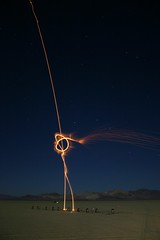
It’s hard to lose a rocket when there is nothing, not even a rock, for miles. (At home, many rockets end up in trees or drift randomly across the neighborhood.)

When the winds pick up, the parachutes can drag the rockets, and you hope that you can run faster… My Mirage got a “playa rash” from the drag.

A flickr question from Rocketeer prompted me to try a portable GPS system in the payload of one of my wider rockets (on the right), and it worked like a charm. (If my speed got too high, I would have problems with a stock consumer model, per an earlier discussion).

4 responses to “Easy Recovery on the Playa”

  1. Three recovery modes:

    1) Nasa: Aircraft Carrier

    Future XPRS recovery vehicle

    2) Steve: Air Jordans

    Nasa uses aircraft carriers...

    3) 100k team: Shovels

    How to hide a rocket

    The black spot in the middle is 3 inches of the 8 ft long sustainer (2nd) stage of this rocket, which entered the playa at about Mach 1, making a neat little hole.

    4 hours and 11 ft. of digging later, not all of it was recovered – a tricky business considering the motors were still unused and potentially ‘live’. Added new meaning to its name "All In".

    A beautiful rocket, visually and by design, compromised by a software glitch beyond the control of the team that built it. Stay tuned: Once reckoned with, this team will set new records… and then push the envelope even further. A valiant effort by a dedicated team.

  2. I would imagine the star gazing is fairly spectacular out there as well. Not much light pollution in any direction.

  3. awesome triptych, dirty V.

    gdsanders: right you are. And the air is clear. During other months, I was told, you can see the center of our galaxy…
    The path of instability

Leave a Reply

Your email address will not be published. Required fields are marked *